Burning Out Before You Break Through: The Quiet Crisis Killing Competitive Gamers' Careers
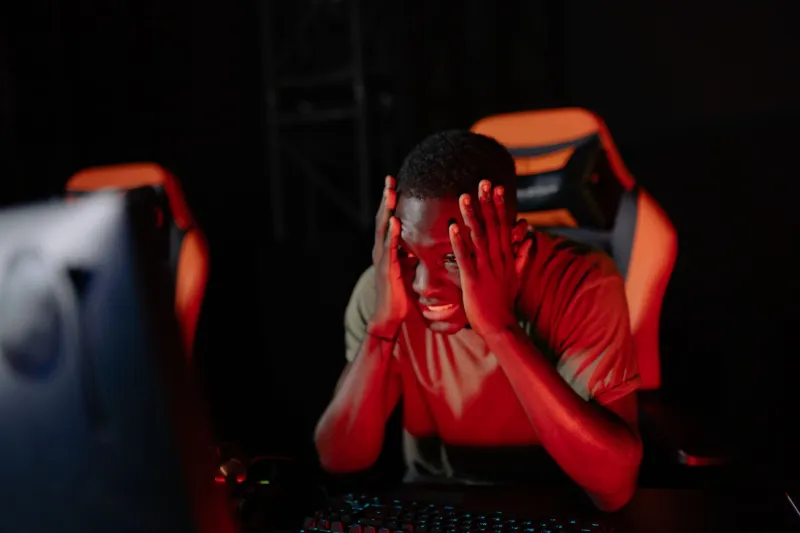
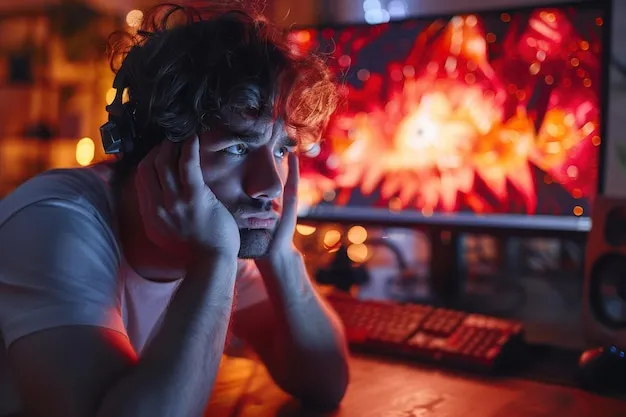
You log in. Queue up. Play six games. Lose four. You don't really remember any of them.
If that sounds familiar, you might already be further down the burnout spiral than you think. Competitive gaming has a dirty little secret that nobody in the industry wants to talk about too loudly: the vast majority of players who go hard in ranked — who actually commit, grind, and care about climbing — are gone within two years. Not because they got outskilled. Not because the game died. Because they burned out and never came back.
This isn't a niche problem. It's an epidemic quietly gutting communities across every major title, from League of Legends to Valorant to Apex Legends.
What Burnout Actually Looks Like in Gaming (It's Not What You Think)
Most people picture burnout as some dramatic collapse — the moment you rage-quit and uninstall. But that's not how it usually goes. Gaming burnout is sneaky. It creeps in over weeks and months, disguising itself as bad luck, a rough patch, or just "the meta being broken."
Sports psychologists who work with esports athletes have identified a handful of warning signs that are specific to competitive gaming environments:
Autopilot sessions. You're queueing, but you're not really there. You're making decisions out of muscle memory rather than active thought. Your mechanics might even look fine from the outside, but internally, you've checked out. This is your brain's way of protecting itself from a stimulus it's grown to associate with stress.
Decision fatigue spirals. Competitive games demand constant micro-decisions — rotations, resource management, target priority. When your mental bandwidth is depleted, the quality of those decisions tanks hard. You start making choices that feel right in the moment but are objectively bad, and then you can't even explain why afterward.
Loss aversion hijacking your sessions. This one's particularly brutal. Instead of playing to win, you start playing not to lose. You become passive, overly cautious, and emotionally reactive to every death or mistake. You're no longer competing — you're just surviving, and you're miserable doing it.
The tricky part? These symptoms reinforce each other. Autopilot leads to worse performance, worse performance triggers loss aversion, and decision fatigue makes it impossible to course-correct.
Why Competitive Gaming Is Uniquely Brutal on the Mind
Here's something casual players don't fully appreciate: grinding ranked is a psychological endurance sport. The feedback loops in competitive games are designed to be engaging, which means they're also designed to be relentless.
Unlike traditional sports, there's no off-season built into your ranked queue. No coach pulling you aside and telling you to take a week off. No locker room culture that normalizes rest. The game is always there, the queue is always open, and the leaderboard is always ticking.
Add in the social pressure that's unique to US gaming culture — streaming, clip culture, the constant comparison to content creators who appear to grind 12 hours a day — and you've got a recipe for players who feel guilty the moment they step away from the keyboard.
Retired pro players who've spoken publicly about their experiences frequently describe a version of the same story: they loved the game until they hated it, and the transition happened so gradually they didn't notice until it was too late.
The Warning Signs You're Already in Trouble
Beyond the gameplay symptoms, there are lifestyle red flags worth paying attention to:
- You're skipping things you used to enjoy to squeeze in more sessions, but you're not actually enjoying the sessions either.
- Your mood after losing is disproportionate to what's actually at stake. A ranked loss isn't a personal failure, but it's starting to feel like one.
- You've stopped improving despite the hours. Volume without intentionality is just wearing yourself down.
- Gaming has become an obligation rather than something you choose. You have to play. You're not sure you want to anymore.
If two or more of those hit close to home, it's time to be honest with yourself.
Recovery Strategies That Don't Require Quitting
Here's the good news: you don't have to walk away from competitive gaming to recover from burnout. In fact, cold-turkey quitting often makes things worse by removing the positive associations you still have with the game along with the negative ones.
Scheduled breaks, not reactive ones. Don't wait until you're furious to stop playing. Build mandatory rest days into your week the same way a serious athlete builds recovery days into a training schedule. Two or three competitive sessions per week with intentional off days is more sustainable than seven consecutive days of grinding.
Decouple your identity from your rank. This one's hard, but it's probably the most important. Your LP total is a data point, not a measure of your worth as a person or even as a player. Reframing rank as feedback rather than identity takes practice, but it fundamentally changes your relationship with losing.
Bring in a non-ranked game. Keeping a low-stakes title in your rotation — something you play purely for fun with zero competitive investment — gives your brain a pressure release valve. It reminds you that gaming can feel good without consequences attached.
Talk to someone who gets it. Gaming burnout is increasingly being taken seriously by mental health professionals, and there are therapists and sports psychologists who specialize in esports athletes. The stigma around seeking that kind of support is fading fast, and the results are real.
Audit your session quality, not just your session length. One focused, intentional hour is worth more than four hours of autopilot. Start tracking how mentally present you actually are during your games, and cut sessions short when you notice you've mentally left the building.
The Long Game
The players who make it in competitive gaming long-term — the ones still climbing and still loving it five, ten years in — aren't the ones who grinded hardest without stopping. They're the ones who figured out how to treat themselves like athletes: with training, yes, but also with recovery, strategy, and self-awareness.
Burnout isn't a sign you're weak or that you don't want it enough. It's a sign you're human, and that you've been running a sprint pace on a marathon course.
Slow down. You've got a lot more game left in you.