Why Your Brain Betrays You in Ranked Mode — And What to Do About It
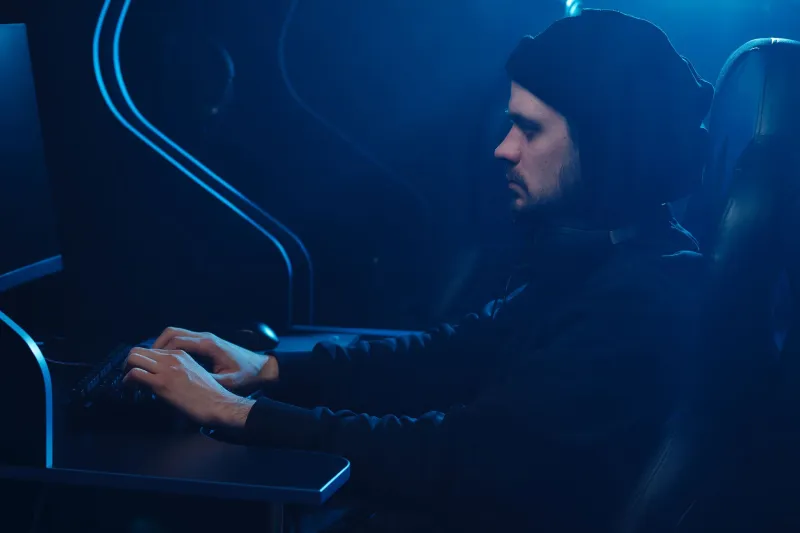
You've been grinding normals all week. Your mechanics feel sharp, your decision-making is crisp, and you're reading the game better than ever. Then you queue into ranked — and it all falls apart. The hands get a little shaky, the calls come slower, and suddenly you're making mistakes you haven't made in weeks.
Sound familiar? You're not alone, and more importantly, you're not just "bad under pressure." What you're experiencing has a name, a neurological explanation, and — here's the good news — a fix.
What Ranked Anxiety Actually Is
Sports psychologists have studied performance anxiety in athletes for decades, and the esports world is finally catching up. At its core, ranked anxiety is your nervous system misreading a competitive game as a genuine threat. Your brain doesn't cleanly separate "my LP is on the line" from "I am in danger." When the stakes feel high, the amygdala — the part of your brain responsible for threat detection — starts firing, flooding your body with cortisol and adrenaline.
In a physical sport, that adrenaline can actually help. In a precision-based digital environment where you need fine motor control, fast pattern recognition, and calm decision trees, it's a disaster. Your working memory shrinks. Tunnel vision sets in. You start playing reactively instead of proactively.
Esports performance coach and former pro player mentors who work with teams in games like Valorant and League of Legends have pointed to something they call "the stakes gap" — the mental distance between how you perform when nothing is on the line versus when something is. The wider that gap, the more anxiety is eating your potential.
The Choking Mechanism: It's Not What You Think
Here's the counterintuitive part: choking under pressure often happens to players who care the most and who have actually developed real skill. If you've never cared about your rank, you never choke. If you're a true beginner, there's nothing to overthink.
Choking is a byproduct of over-monitoring. When the pressure spikes, skilled players suddenly start consciously thinking through actions that should be automatic. A Diamond-level player who can land a perfect combo in practice starts mentally narrating each input during a ranked match — and that narration is what breaks the fluidity.
Psychologists call this "paralysis by analysis," and it's been documented extensively in golfers, basketball players, and surgeons. In gaming, it shows up as hesitation on engagements you'd normally take without thinking, second-guessing rotations you've made a thousand times, or abandoning a playstyle that works because it suddenly "feels wrong."
Techniques That Actually Move the Needle
Controlled Breathing Before the Match
This one sounds almost too simple, but the research is clear. Box breathing — inhale for four counts, hold for four, exhale for four, hold for four — activates the parasympathetic nervous system and physically reduces cortisol levels within minutes. A lot of pro players in the FPS and MOBA spaces have adopted pre-match breathing routines, and it's not just a vibe thing. It's measurable.
Try running two or three cycles of box breathing during the loading screen or champion select. You're not meditating — you're resetting your nervous system so it stops treating a game like a bear attack.
Build a Pre-Match Ritual
Routines are powerful because they create psychological anchors. When you do the same sequence of actions before every ranked session, your brain starts associating that sequence with a focused, ready state. It doesn't have to be elaborate — some players do a quick warm-up in a practice tool, others listen to a specific playlist, some do a few minutes of stretching.
The content of the ritual matters less than the consistency. Over time, the ritual itself becomes the trigger for getting into your competitive headspace rather than your anxiety headspace.
Reframe What the Match Means
One of the most effective psychological interventions is something called "cognitive reappraisal" — basically, consciously changing the story you're telling yourself about a situation. Instead of "this match determines if I'm actually good," try "this match is data about where I need to improve."
This isn't toxic positivity. It's a legitimate way to reduce the perceived stakes without reducing your effort. Pro players and performance coaches consistently describe the mindset shift from outcome-focused ("I need to win") to process-focused ("I need to execute my gameplan") as one of the biggest separators between players who plateau and players who keep climbing.
The Post-Loss Protocol
How you handle losing matters as much as how you handle pressure during the game. Tilting — the cascading mental deterioration after a bad game — is where a lot of players give back their gains. If you find yourself immediately queuing into another ranked game while still emotionally activated, you're not giving your nervous system time to reset.
Give yourself a hard rule: after a loss that genuinely frustrated you, take at least a 10-minute break. Walk around, get water, do literally anything that isn't staring at the defeat screen or reading post-game chat. The players who climb aren't the ones who never lose — they're the ones who lose without letting it compound.
The Bigger Picture
Ranked anxiety is, at its root, a sign that you care. That's not a weakness — it's the raw material of competitive drive. The goal isn't to stop caring about your rank. It's to stop letting that care activate your threat response instead of your focus response.
The mental side of competitive gaming is real, it's trainable, and it's one of the most underutilized edges available to players at every level. The mechanical ceiling for most games is sky-high, but the mental ceiling? A lot of players never even get close to it because they write off the psychology as soft stuff.
At DF999i Arena, we'd argue it's the hardest skill to develop and the one with the highest return. Level up your brain, and the rank will follow.