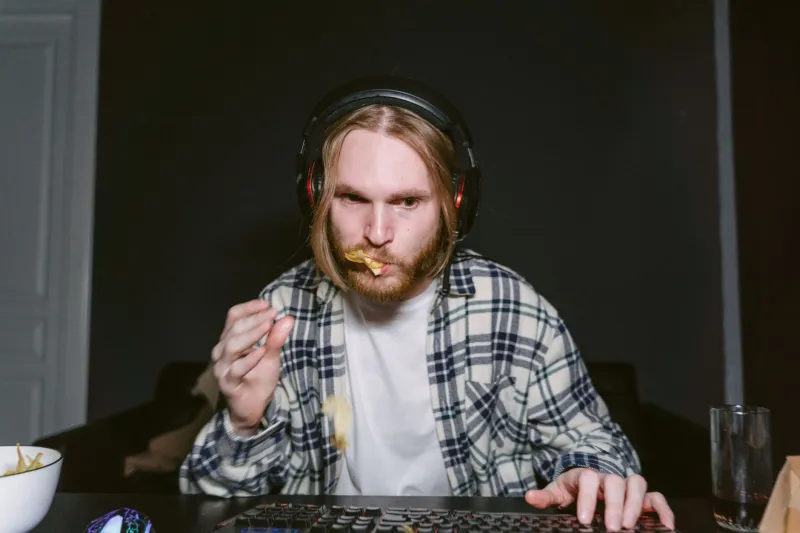
Dual Screen, Single Focus: Are You Actually Competing or Just Performing?
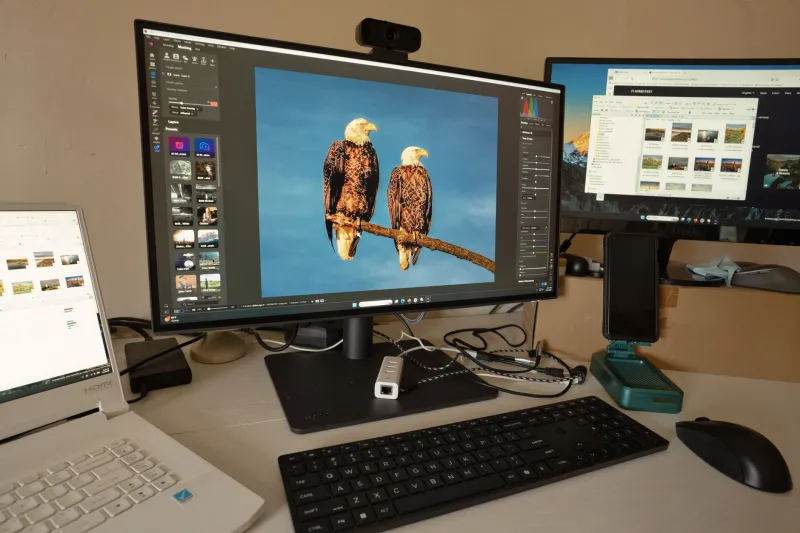
Walk into any US gaming setup worth posting on Reddit right now and you'll probably see the same thing: two monitors, maybe three. A stream running on the side. Discord notifications ticking in the corner. A phone face-up next to the keyboard. It looks productive. It looks like a content creator's dream rig.
But here's the uncomfortable question nobody's asking out loud: is all that screen real estate actually making you worse at the game you're trying to climb in?
The short answer, backed by a growing body of attention research, is yes — and probably more than you think.
The Attention Economy Inside Your Own Bedroom
Here's the thing about human attention: it doesn't actually multitask. What feels like parallel processing is really your brain rapidly context-switching between tasks. Each switch carries a cognitive cost — researchers call it "attention residue" — where part of your mental bandwidth stays stuck on the previous task even after you've moved on.
For competitive gaming, this is a serious problem. A match-deciding decision in a ranked game can unfold in under a second. Enemy positioning, cooldown tracking, resource management — these all demand full cognitive presence. When part of your brain is still processing the Twitch chat message you glanced at three seconds ago, you're playing with a handicap you can't even feel.
And that's the insidious part. The performance degradation is subtle enough that most players never attribute their losses to their setup. They blame their teammates. They blame the matchmaking. They never look left at the second monitor.
What the Second Screen Is Actually Doing to Your Mechanics
Let's get specific about the damage.
Reaction time. Studies on divided attention consistently show that peripheral visual stimuli — even ones you're not consciously focusing on — draw processing resources from your primary task. Motion on a second screen, whether it's a stream, a YouTube video, or even a static notification badge updating, creates low-level visual competition. Your eyes don't fully commit to the primary display, and your reaction window gets wider.
Decision latency. When you're in content mode — streaming, monitoring chat, thinking about clip-worthy moments — your decision-making framework shifts. You start playing for the highlight rather than for the win. That's not a character flaw; it's a documented psychological effect. Your brain optimizes for whatever it thinks the goal is. If part of you is performing for an audience, your in-game choices start reflecting that, often at the worst possible moments.
Tilt recovery. One underrated cost of the always-on setup is that you never fully decompress between rounds. Scrolling Twitter during loading screens, checking stream metrics after a loss, reading comments about your gameplay — all of it extends the emotional tail of each match into the next one. You're never fully reset. You carry baggage into every game without realizing it.
The Content Creator's Dilemma
To be fair, this isn't a simple problem to solve — especially for players who are genuinely trying to build an audience while also climbing. That dual goal is real, and it's not crazy. Plenty of US streamers have done exactly that.
But the ones who've done it successfully tend to have one thing in common: they separate the modes. Streaming and ranked grinding aren't the same activity, and treating them as interchangeable is where most people go wrong.
Building a Twitch following while playing ranked is a legitimate hustle. Letting the Twitch following actively degrade your ranked performance is a different thing entirely. The question is whether you've thought clearly about which one you're doing.
Practical Fixes That Don't Require Selling a Monitor
You don't have to blow up your setup to fix this. A few targeted changes can recover a surprising amount of performance.
Physical monitor placement. If your second screen is in your direct peripheral vision, move it. Even shifting it 15-20 degrees further to the side reduces passive visual competition significantly. Out of sightline, out of mind — your brain stops involuntarily processing it.
Notification blackout during ranked. This sounds obvious but almost nobody actually does it completely. We're talking phone face-down, Discord on do-not-disturb, stream chat minimized or moved to a position where you'd have to physically turn your head to see it. Passive awareness of notifications is enough to create attention residue. The threshold for distraction is lower than people assume.
Mode switching rituals. Before queuing for ranked, build a 2-minute ritual that signals to your brain that you're switching from content mode to compete mode. Close unnecessary tabs. Put on your competitive playlist if you use one. Take 30 seconds to review your focus goal for the session. It sounds soft, but environmental cues are powerful anchors for cognitive state.
Scheduled content sessions. Rather than streaming ranked 24/7, consider blocking off specific sessions as pure ranked focus and others as content-first. You'll likely find your ranked performance improves during focus sessions, which — ironically — gives you better content to post anyway.
The Real Flex Is Knowing When to Turn It Off
There's a cultural pressure in gaming right now to always be on. Always streaming. Always clipping. Always building. And that hustle is real and valid. But the players who are going to separate themselves at DF999i Arena and in competitive scenes across the country are the ones who understand that the best content comes from actually being good — and being good requires giving the game your full attention sometimes.
Your second monitor isn't your enemy. But it's not neutral either. Treat it like any other piece of your competitive setup: something to be configured intentionally, not just left running because it looks cool.
The climb is hard enough without splitting your brain in half before you even load into the match.