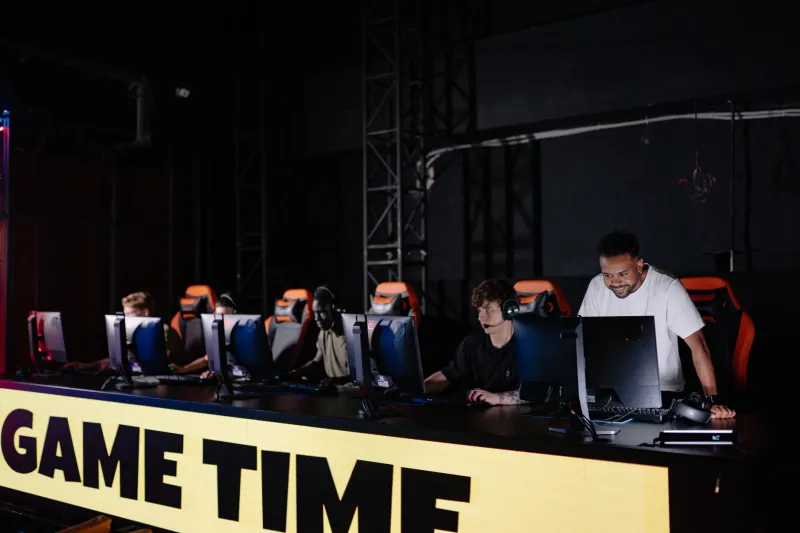
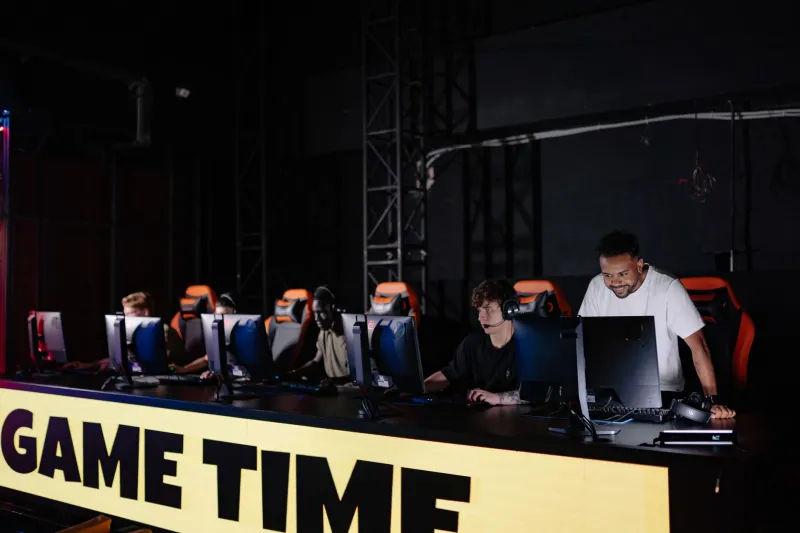
They Stepped Away for Years — Then Came Back and Dominated: 5 Gamers Who Proved Time Off Is a Weapon

Photo by Photo by Florian Olivo on Unsplash on Unsplash
Conventional wisdom in competitive gaming says you can't afford to stop. The meta evolves, your mechanics rust, and younger players eat your lunch while you're away. Log off for too long and you're done.
But for a growing number of US players, that conventional wisdom turned out to be completely wrong.
These five gamers walked away from competitive play — some for five years, some for longer — and when they came back, they didn't just pick up where they left off. They climbed higher than they ever had before. Here's what they figured out that most non-stop grinders never will.
1. Marcus, 29 — League of Legends, Platinum to Challenger in 18 Months
Marcus was a mid-lane main who peaked at Platinum 1 in 2017 before life pulled him away from the game. College, a demanding job in logistics, a relationship — the usual stuff that makes ranked queues feel a lot less important.
When he came back in 2022, he expected to be terrible. What he found surprised him.
"I didn't have any of the bad habits I'd built up," he says. "Years of grinding had basically hardwired me to play on autopilot. Coming back fresh, I was actually thinking about every decision instead of just reacting."
The bigger shift, though, was psychological. Marcus no longer needed rank to validate his self-worth. He'd built a real career, real relationships — League was just a game again, and that emotional distance made him ruthlessly calm under pressure.
He hit Challenger in Season 13. At 29. Against players half a decade younger.
The lesson: Emotional detachment from rank isn't weakness — it's a competitive advantage. You make better decisions when the outcome doesn't feel like life or death.
2. Danielle, 31 — Valorant, Unranked to Immortal in One Act
Danielle hadn't played a competitive FPS seriously since her Counter-Strike days in the early 2010s. She picked up Valorant in 2023 mostly because her younger coworkers wouldn't stop talking about it.
"I figured I'd be Silver at best," she laughs. "I hadn't played anything ranked in like eight years."
What Danielle brought back with her was something most newer players are still developing: genuine game sense. Years of CS had built a mental model of spatial awareness, economy management, and team communication that translated directly into Valorant even though the specific mechanics were different.
She also brought a work ethic shaped by years in a demanding professional environment. She treated her ranked sessions like meetings — scheduled, focused, and followed by a brief review of what went wrong.
Immortal in her first full act. She's currently pushing for Radiant.
The lesson: Transferable skills are real. Time away from one game doesn't erase the foundational knowledge you built across years of competitive play.
3. Jerome, 34 — Apex Legends, Returning After 6-Year Break from Battle Royale
Jerome was a top-500 Fortnite player in the game's early days before completely stepping away from battle royale in 2018. He came back to the genre through Apex in 2024, drawn in by a friend group that had gotten deep into ranked.
His mechanics were rusty. His movement in Apex was rough at first. But his game-reading ability was almost immediately elite.
"I understood what was happening before most of my teammates did," Jerome says. "Zone positioning, third-party timing, when to push and when to hold — none of that knowledge went away. I just had to re-learn the specific controls."
Jerome also came back with something he didn't have in his Fortnite days: patience. At 28, he'd been reactive and aggressive. At 34, he understood the value of waiting for the right moment. His teammates started calling him "the closer" because of how consistently he performed in final rings.
He hit Predator within six months of his return.
The lesson: Game-specific mechanics can be relearned quickly. High-level strategic thinking, once developed, doesn't expire.
4. Kevin, 27 — Street Fighter 6, Silver to Diamond After 5-Year Fighting Game Hiatus
Kevin grew up competing in local Street Fighter V tournaments in the Chicago area before burning out hard in 2019. He walked away from fighting games entirely — no casuals, no watching the scene, nothing.
When Street Fighter 6 launched, something about the new art style pulled him back in. He was expecting to start from scratch.
Instead, he discovered that the mental framework he'd built for reading opponents — recognizing patterns, identifying habits, adapting mid-match — was completely intact. It was like riding a bike, except the bike was a deeply complex fighting game system.
But the real difference, Kevin says, was his relationship with losses. In his tournament days, every loss felt catastrophic. Now, each loss was just information.
"I stopped being embarrassed by getting read," he explains. "I started getting curious about it instead. Like, okay, what did they see? How do I fix that? It turned every loss into a free coaching session."
He's now one of the top-ranked Street Fighter 6 players in the Midwest and has started coaching newer players on the mental side of competition.
The lesson: Reframing losses as data points instead of failures is a mindset shift that's nearly impossible to make while you're deep in the grind — but becomes natural when you've had time away to gain perspective.
5. Aisha, 30 — Rocket League, Gold to Grand Champion After 7-Year Gap
Aisha's story might be the most dramatic on this list. She played Rocket League casually for about a year back in 2016, barely scratching Gold, before quitting to focus on grad school. She didn't touch the game again until 2023.
What she came back with was structure. Graduate school had taught her how to break down complex problems into manageable components, how to study effectively, and how to identify what she didn't know. She applied that framework directly to Rocket League.
"I watched film like I was writing a thesis," she says. "I wasn't just watching cool clips. I was studying mechanics, understanding why certain plays worked, building a model of what Grand Champion-level play actually looked like."
She also found a coach through an online community and treated her sessions with the same seriousness she'd brought to her academic work.
Seven years after barely making Gold, Aisha hit Grand Champion. She's currently one rank away from Supersonic Legend.
The lesson: Intentional, structured practice beats raw volume every time. A focused return with a clear learning methodology can outpace years of unstructured grinding.
What All Five Have in Common
These players aren't anomalies. They're examples of something that competitive gaming culture rarely acknowledges: time away, when used well, builds the things that grinding alone can't.
Emotional maturity. Perspective on losing. Transferable strategic knowledge. The ability to study instead of just play.
The grind is real. The hours matter. But so does the person putting in those hours — and sometimes, the best thing you can do for your competitive career is step away long enough to become someone better equipped to handle it.
Come back older. Come back wiser. Come back ready.