The All-Nighter Lie: Why Marathon Rank Grinds Are Costing You More Than You Think
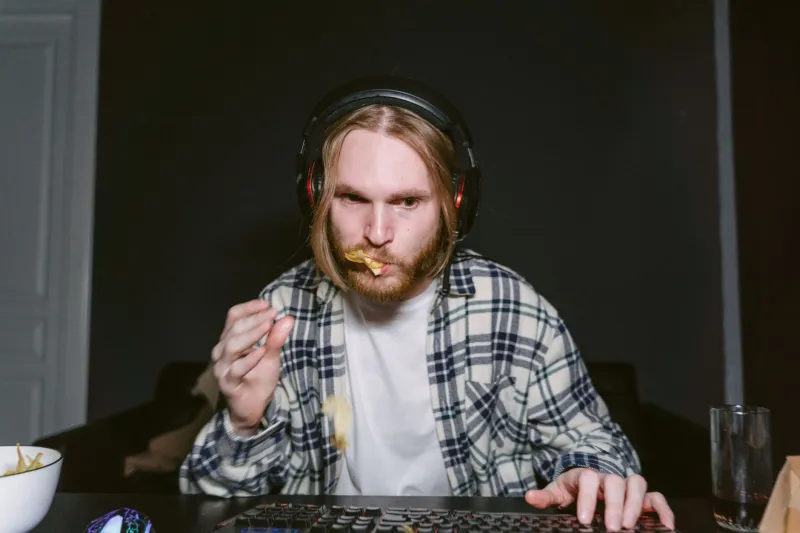
It's 2 AM on a Saturday. Your favorite streamer is 14 hours into a rank grind, energy drink in hand, chat going absolutely wild. They just won a clutch game. The momentum feels real. The progress feels real. And somewhere in the back of your head, a thought forms: maybe I should try that.
Don't.
The 24-hour rank grind is one of competitive gaming's most persistent myths — a content format that looks like dedication but functions more like a slow-motion car crash. And the gap between what these streams look like and what's actually happening to the player's brain is significant enough that it's worth breaking down in detail.
What Gets Broadcast vs. What's Actually Happening
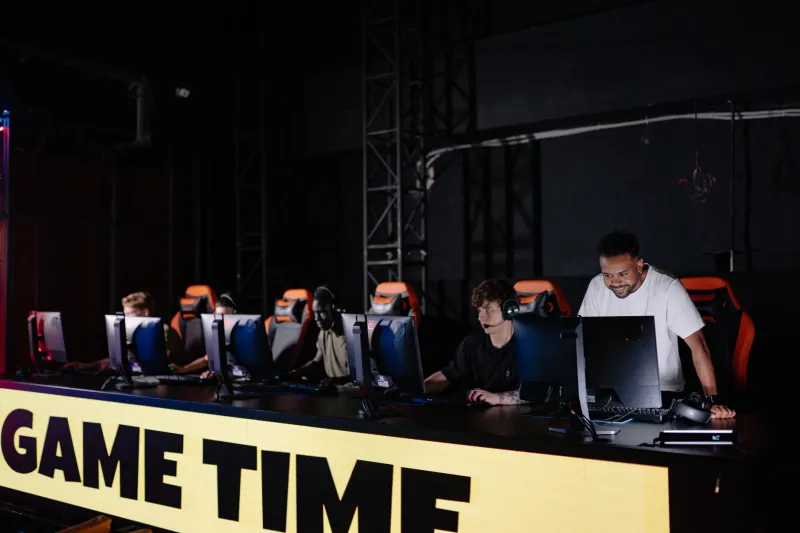
Marathon grind streams are, first and foremost, content. They're built to be entertaining, dramatic, and shareable. Streamers who do them know how to lean into the emotional arc — the early confidence, the mid-grind slump, the late-night comeback. It makes for genuinely compelling viewing.
But the incentive structure for a streamer doing a 24-hour rank grind is fundamentally different from yours as a competitive player. Their goal is viewer retention and clip-worthy moments. Your goal — presumably — is to actually get better and climb ranks in a way that sticks.
Those two goals do not have the same optimal strategy.
What rarely makes it into the highlight reel: the games where decision-making visibly deteriorates around hour 10. The misplays that get laughed off in stream but represent real rank damage. The post-grind crash where the player spends the next two days playing below their baseline because they're mentally wrecked.
What Sleep Deprivation Actually Does to Your Game
This isn't speculation — there's a substantial body of research on cognitive performance under sleep deprivation, and the findings are not friendly to the all-nighter crowd.
After roughly 17 to 19 hours without sleep, cognitive performance on tasks requiring attention, reaction time, and decision-making degrades to a level comparable to a blood alcohol content of 0.05%. Past 24 hours, that comparison creeps toward 0.10% — which is above the legal driving limit in every US state.
Now think about what competitive gaming actually requires: rapid threat assessment, split-second mechanical execution, resource management, reading opponents, adjusting strategy mid-match. These are exactly the cognitive functions that sleep deprivation hits hardest.
Your reaction time slows. Your ability to update your strategy based on new information weakens. Your emotional regulation degrades, making tilt more likely and recovery from mistakes harder. And critically — your awareness of how impaired you are also drops, which is why sleep-deprived players often feel like they're playing fine when the data says otherwise.
The Illusion of Momentum
One of the most seductive things about a long grind session is the feeling of momentum. You win a few games in a row, your rank ticks up, you feel locked in — and stopping feels like leaving something on the table.
But momentum in ranked play is partly a psychological construct, and it has a ceiling. The longer a session runs, the more your performance regresses toward — and then below — your actual skill baseline. What feels like momentum in hour 12 is often just variance. You're not playing better; you're in a good matchup streak that has nothing to do with your cognitive state.
Worse, when that streak ends — as it always does — a sleep-deprived player is uniquely bad at handling the emotional fallout. The tilt response is stronger, the decision to keep queuing despite diminishing returns is harder to resist, and the resulting loss streak can wipe out hours of gains in a fraction of the time.
This is the pattern that players who've been through it describe almost universally: a grind that peaked around hour six, a slow bleed from hour eight onward, and a final hour of desperate queuing that ended badly.
The Players Who Switched — and What Happened
Here's where the conversation gets genuinely interesting. A growing number of competitive players in the US have moved away from marathon sessions entirely, replacing them with structured short-session training — and they're reporting better rank progression as a result.
The approach varies, but the common thread is deliberate practice in blocks of 90 minutes to two hours, followed by mandatory breaks and a hard stop for the day. Some players cap themselves at three sessions a day with rest between them. Others commit to a single focused session with VOD review built in afterward.
The results aren't dramatic in any single day — and that's exactly the point. What these players are building is consistent upward movement without the rank erosion that follows a crash session. Over the course of a season, the math works out significantly in their favor.
One player who made the switch after years of weekend marathon sessions put it bluntly: he'd spent two seasons grinding hard during all-nighters and finishing the season roughly where he started. His first season using structured short sessions, he climbed two full divisions and actually held the rank.
The Content Problem
It's worth naming something directly: the 24-hour grind as a format exists because it performs well as content, not because it works as a training method. And because it performs well, it gets amplified. Millions of viewers watch it, associate it with competitive dedication, and internalize the idea that grinding harder means grinding longer.
That association is doing real damage to how a lot of US players approach their own development. The streamers doing these sessions are often skilled enough that they can absorb the cognitive cost and still perform reasonably well. Or they're not actually trying to rank up — they're trying to entertain. Either way, they're not a reliable model for how you should train.
A Better Approach to Climbing
If you're serious about your rank at DF999i Arena or in any competitive title, the framework that actually works is less exciting to watch but far more effective to live.
Prioritize sleep above session length — consistently. Aim for focused blocks of play where you're genuinely engaged, not grinding on autopilot. Set a stopping condition before you start: a win target, a time limit, or a tilt threshold. Stick to it even when momentum feels real.
And the next time you watch a streamer 18 hours into a rank grind, appreciate it for what it is — great content. Just don't let it set your training schedule.
The leaderboard doesn't care how long you stayed up. It only counts where you finish.