Fragging Out and Still Losing: The Harsh Truth About Individual Skill in Team Games

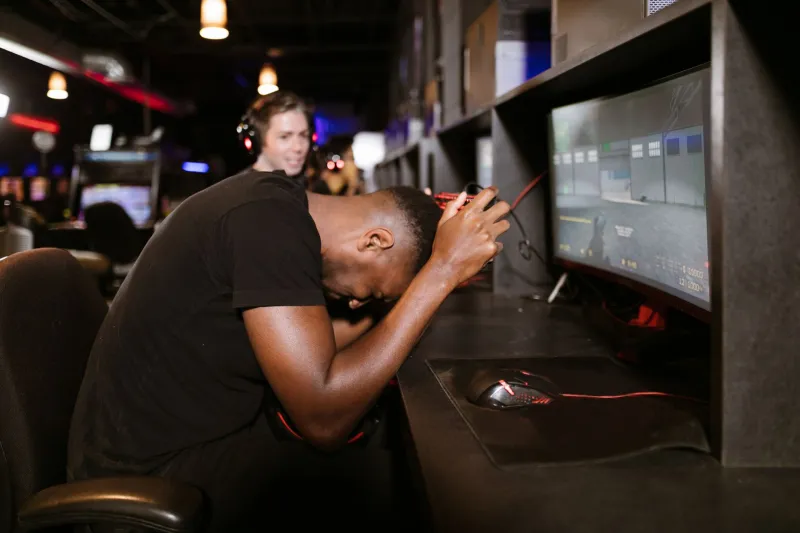
You played out of your mind. Best damage in the lobby. Highest kill count. First blood, last fight, and everything in between. And yet — the loss screen hit you like a truck anyway.
If you've spent any real time in competitive gaming, this scenario isn't hypothetical. It's Tuesday. And it's one of the most frustrating experiences the ranked ladder has to offer, because it genuinely feels like you did everything right. The problem is that "everything right" in a team-based game is a lot bigger than your personal scoreboard.
Let's get into why individual brilliance so often fails to translate into a W — and what it actually takes to start converting those performances into wins that matter.
The Scoreboard Lies to You
Kill counts, damage numbers, KDA ratios — these stats feel like truth because they're concrete. They're right there on the screen. But in most competitive titles, from League of Legends and Valorant to Apex Legends and Overwatch 2, the scoreboard measures output, not impact.
Think about it this way: a player can go 25-3 in a game and still be the reason their team lost. How? By spending 40 minutes in a lane, farming gold and racking up kills on opponents who already got ahead elsewhere on the map. The scoreboard looks incredible. The actual game state? A disaster that was unfolding in real time while that player was busy stat-padding.
This is what coaches and analysts call the macro disconnect — the gap between individual mechanical execution and the larger strategic picture of a match. And it's one of the most common ceilings that talented players hit on their way up the ranked ladder.
Map Control Is the Currency You're Not Counting
Here's a concept that separates mid-elo grinders from genuinely high-level competitors: map control is worth more than most kills.
In tactical shooters, holding key angles and denying enemy rotations often matters more than winning a 1v1 duel. In MOBAs, vision control and objective timing can swing an entire match regardless of who's winning the kill count. In battle royale titles, positioning and zone awareness are frequently the difference between a top-five finish and a mid-game wipe.
When a player focuses exclusively on mechanical outplay — the flashy peek, the perfect combo, the insane flick — they're often trading long-term map control for short-term highlights. It feels great in the moment. It builds clips. It builds confidence. But it can actively hurt the team's strategic position if those plays aren't being made in service of a larger game plan.
The players who seem to "do less" but consistently win? They're usually the ones quietly stacking map control, rotating efficiently, and making sure their team is positioned to take objectives when the opportunity opens up.
Coordination Beats Raw Talent — Repeatedly
Here's something competitive gaming at the highest level proves over and over again: a coordinated average team will beat a talented uncoordinated one more often than not.
This isn't just theory. Look at virtually any major esports upset — teams with individually lower-ranked players systematically dismantling rosters full of mechanical prodigies because they played as a unit. Communication, role clarity, and synchronized decision-making create a multiplier effect that raw individual skill simply can't replicate alone.
For ranked solo queue players in the US, this creates a real tension. You can't always control who you're playing with. Coordination is inconsistent. Comms are a mixed bag at best. But understanding that coordination matters changes how you approach the game — even in a chaotic solo queue environment.
Instead of playing to maximize your own stats, you start playing to enable coordination wherever it's possible. You rotate to support a teammate who's getting pressured. You call out information even when no one responds. You make the unsexy play that sets your squad up rather than the flashy one that pads your numbers. Over time, that shift in mindset shows up in your win rate in ways that pure mechanical grinding never will.
The Mental Shift: From "I Performed" to "We Won"
This is where the real work happens, and it's genuinely uncomfortable for players who've built their identity around individual skill.
Competitive gaming at its core rewards outcomes, not performances. You don't get ranking points for going off in a losing game. The elo system doesn't care that you carried harder than anyone should have to — it cares whether your team crossed the finish line first.
Making peace with that requires a mental reframe that a lot of players resist. Accepting that your individual performance is only one variable in a multi-variable equation can feel like giving up control. It's not. It's actually the opposite — it's expanding your awareness to include all the variables that actually determine whether you win or lose.
The players who make this shift stop asking "why didn't my team match my performance?" and start asking "what could I have done differently to give my team a better chance?" That's a harder question. It has less satisfying answers sometimes. But it's the question that leads to real improvement.
Practical Ways to Bridge the Gap
So how do you actually start converting dominant individual performances into consistent team wins? A few things worth building into your game:
Play around your team's win condition, not your own. Before a match starts, ask yourself what your team needs to win — not what you need to perform well. Adjust your play style accordingly.
Prioritize objectives over kills when they conflict. If taking a fight means missing a major objective window, skip the fight. The objective almost always matters more.
Communicate impact, not just info. Instead of just calling enemy positions, tell your team what you're about to do and what you need from them. Even basic callouts like "I'm rotating bot, hold mid for 10 seconds" create coordination in chaotic environments.
Review losses where you performed well. This is uncomfortable but essential. Watch the replay, ignore your highlight moments, and find the moments where the game slipped away. Chances are, the macro breakdown happened somewhere you weren't looking.
Accept the variance tax. Some losses are genuinely unwinnable regardless of what you do. The competitive player's job is to reduce the frequency of those scenarios — not eliminate them entirely.
The Carry Ceiling Is Real, But It's Breakable
There's a reason the phrase "you can't carry every game" exists in basically every competitive gaming community in the country. Individual skill has a ceiling when it comes to winning team-based games. At some point, you hit the limit of what one player can control.
But that ceiling isn't fixed. Players who genuinely understand the macro game, who communicate effectively, who make decisions that serve the team's win condition — they push that ceiling higher than most people think is possible.
The players who stay stuck aren't usually the ones who lack mechanical skill. They're the ones who never made the mental shift from "I performed" to "we won." That shift is everything.
Your lane doesn't win the game. Your team does. Start playing like you believe that, and watch what changes.