Chasing Clips Is Killing Your Game: The Hidden Cost of Playing for the Feed
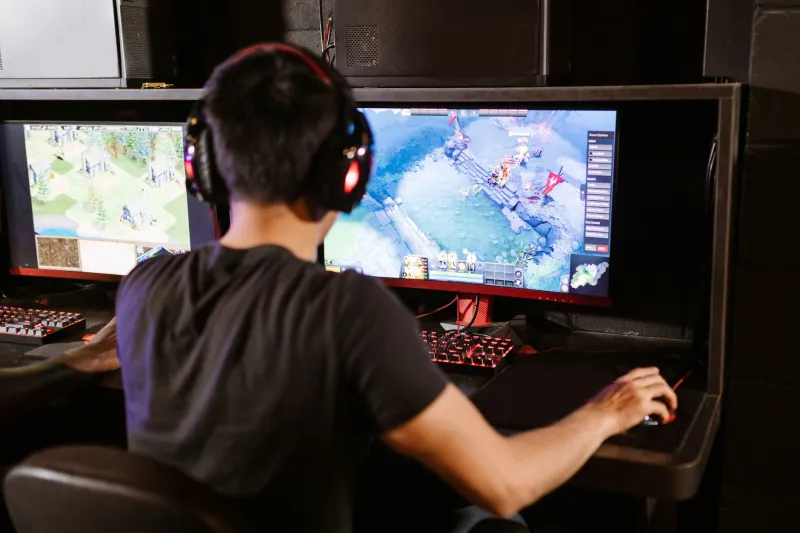
Let's be honest for a second. You've done it. Mid-match, you spotted an opening for something clean — a triple elimination, a flashy 1v3 flank, a mechanical play that would look incredible in a 30-second TikTok — and instead of making the smart call, you went for the moment. Maybe it worked. Maybe you clipped it, posted it, and watched the likes roll in. Maybe it didn't work, and you told yourself you were just "practicing creativity."
Either way, your team lost.
That's the highlight reel trap in a nutshell. And if you're a competitive gamer trying to actually climb — not just look good doing it — it might be the most underrated thing holding you back right now.
When the Algorithm Becomes Your Coach
Social media platforms reward spectacle. That's not a criticism, it's just how they're built. A methodical mid-game rotation that sets up a clean objective win? Boring footage. A perfectly timed bait play that results in a five-kill montage? That's going on the FYP.
The problem is that when you play enough games with a camera-brain running in the background — always half-scouting for moments worth capturing — you start unconsciously shaping your decisions around what looks impressive rather than what wins. It's subtle at first. You hold an ability a beat too long waiting for a better visual payoff. You overextend into a fight you could have avoided because the setup felt cinematic. You pass on the boring-but-correct play because nobody clips "I rotated early and we controlled the objective for four straight minutes."
Over time, those micro-decisions compound. Your macro awareness softens. Your resource management gets sloppy. And your ranked performance starts drifting in a direction that doesn't match how good you feel watching your own highlights.
The Dopamine Feedback Loop Nobody Talks About
Here's where it gets genuinely tricky from a mental performance standpoint: clips give you immediate, measurable feedback. Likes, shares, comments — they're fast, they're concrete, and they feel good. Competitive improvement, on the other hand, is slow, frustrating, and often invisible in the short term.
When your brain is constantly being rewarded for highlight-worthy plays, it starts treating those as the actual win condition. Not the LP. Not the rank. Not the W screen. The clip.
This is a legitimate psychological loop that plenty of competitive players fall into without ever naming it. You might even notice it in how you feel after a match. Did you play a clean, fundamental game and win but have nothing worth posting? Somehow it feels a little hollow. Did you go 8-14 but have one insane highlight moment? You're already opening your editing software.
That inversion — where the process metric (the clip) starts feeling more rewarding than the outcome metric (the win) — is a sign you've got a problem worth addressing.
What "Playing for the Win" Actually Looks Like
Fundamentals are unsexy. There's a reason nobody's posting a compilation of their consistent wave management, their disciplined cooldown tracking, or their patient rotations. That content doesn't go viral. But those habits are exactly what separates players who plateau in mid-tier ranked from players who actually break through.
Playing for the win means making the boring call when the boring call is right. It means trading a potential highlight moment for a higher-percentage play. It means sometimes your game film looks like watching paint dry — and being totally fine with that because you're 3-0 on the week.
Some of the most mechanically gifted players in US competitive scenes are stuck in a loop where their skill ceiling is technically high but their win rate doesn't reflect it. Often, when you dig into their gameplay, you find a consistent pattern of overextension, unnecessary risk-taking, and decisions that only make sense if you imagine someone watching.
How to Actually Break the Habit
None of this means you have to stop clipping your games or posting content. Plenty of top-tier players build audiences and compete seriously. The key is keeping those two goals in separate mental compartments.
Set a pre-session intention. Before you queue up, decide: is this a ranked session or a content session? If it's ranked, commit to making every call based purely on win probability. If it's a content session, queue in a lower-stakes mode where experimenting with flashy plays doesn't cost you actual LP. Don't mix the two.
Review your losses with clip-brain turned off. When you VOD review a bad game, ask yourself specifically: "Was there a moment where I went for a highlight play instead of the correct play?" You'll be surprised how often the answer is yes once you're actually looking for it.
Redefine what a good game looks like to you. Try keeping a simple post-match note — just one sentence about whether your decision-making was sound, regardless of how the game looked. Over time, training yourself to evaluate process over spectacle rewires how you experience competitive play.
Find accountability partners who don't care about your clips. If everyone in your immediate gaming circle is hyping your highlights and nobody's asking about your win rate, you're in an echo chamber. Find players who will give you honest feedback on the boring stuff.
The Balance Is Real — But It Requires Intentionality
Look, content creation and competitive gaming aren't mutually exclusive. The players who do both well aren't just talented — they're deliberate. They know when they're performing for an audience and when they're competing for a result, and they don't let those two modes bleed into each other.
The highlight reel will always be there. The ranked queue will always be there. The question is which one you're actually serving when you're in the middle of a match.
Your best plays are worth sharing. But if chasing them is quietly eroding the fundamentals that make you a dangerous competitor, you're not building a brand — you're building a ceiling.
Dominate the game first. Clip it second.