Silence or Signal: The Real Price of Hitting That Mute Button Mid-Match
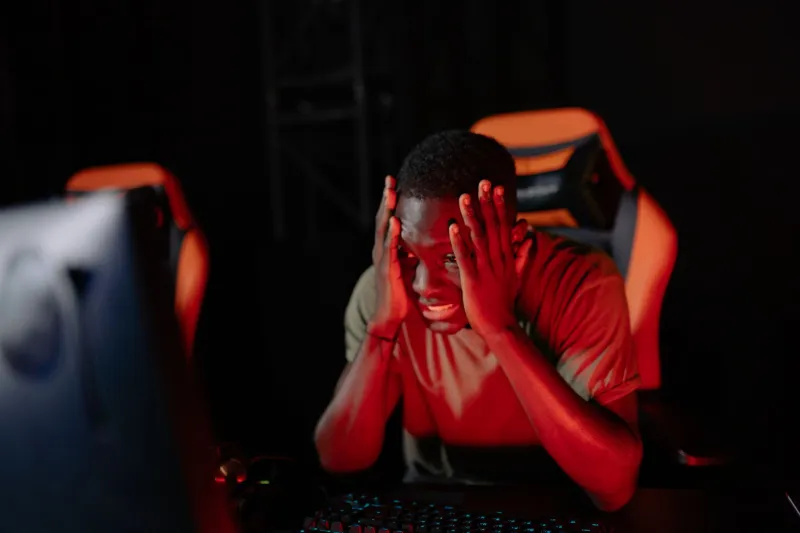
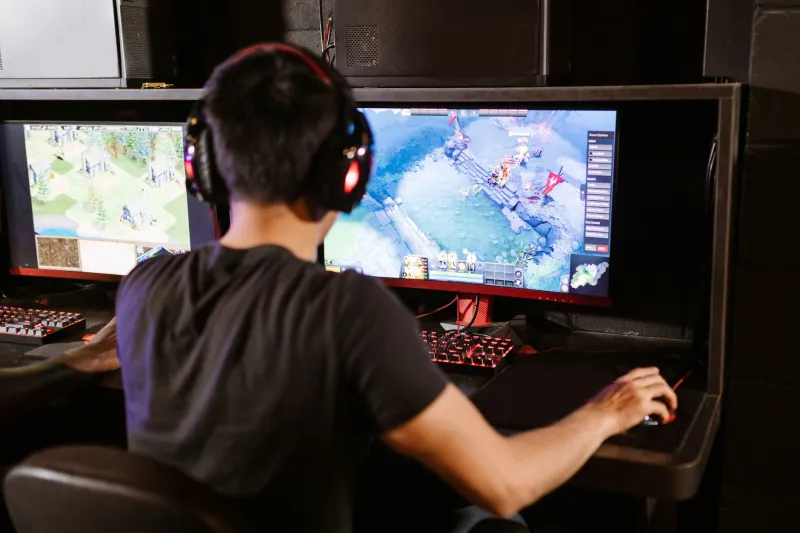
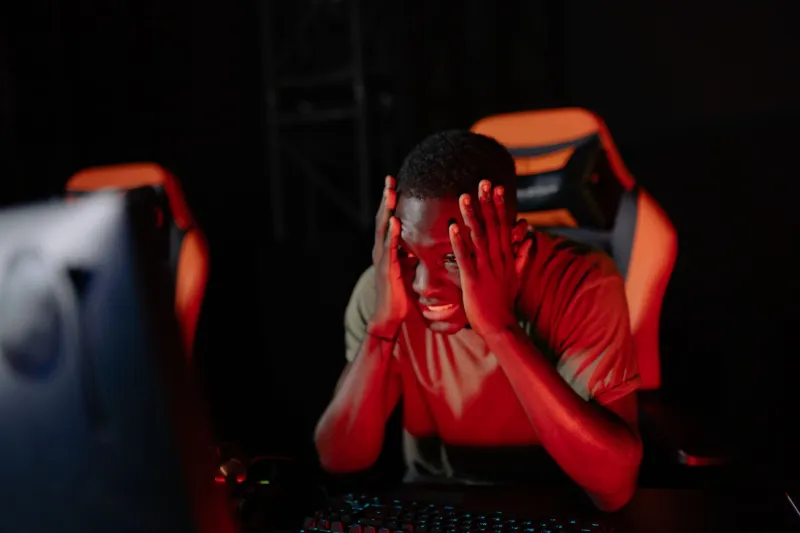
We've all been there. Someone on your team goes 0/4 in the first five minutes and decides the best use of everyone's time is a running commentary on every mistake you've made since you downloaded the game. Your instinct is immediate: mute. Done. Problem solved.
Except it's not always that simple.
There's a real tension hiding inside that mute button — one that competitive players at every level quietly wrestle with. On one side, you've got your mental clarity. On the other, you've got team coordination. And depending on how you manage that trade-off, you could be bleeding ranking points without ever realizing why.
The Mental Case for Going Dark
Let's be honest about what toxic communication actually does to your brain during a match. Research in performance psychology consistently shows that verbal aggression — even when it's not directed at you personally — activates stress responses that narrow your cognitive bandwidth. In plain terms: someone screaming in your ear makes you worse at the game.
Reaction time slows. Decision-making becomes more impulsive. You start playing emotionally rather than strategically. In a ranked environment where margins are razor-thin, that shift can be the difference between a clean carry and a 40-minute loss.
For a lot of players, muting is genuinely the correct call. You remove the noise, you recenter, and you play your game. There's a reason high-elo streamers talk about it constantly. Mental hygiene is real, and protecting your headspace is a legitimate competitive strategy.
But Here's What You're Giving Up
The problem is that even toxic teammates sometimes say useful things. A tilted jungler might still call out an incoming gank. A flaming support might ping a ward location that saves your lane. Real-time callouts — dragon timers, enemy positions, cooldown tracking — are actual information, and information wins games.
When you mute everyone and go full solo mode, you're essentially choosing to play a 5v5 game like it's a 1v5. Sometimes that works. At lower ranks especially, individual mechanics can carry you through the gap. But as you climb, the coordination tax gets heavier. Teams that communicate — even imperfectly — tend to outperform teams that don't.
So the mute button isn't free. It costs something. The question is whether what you're paying is worth what you're getting back.
The Selective Mute Framework
Here's where most guides get it wrong: they treat muting as binary. You either mute everyone or you don't. But there's a smarter way to approach this.
Mute the voice, keep the pings. Most competitive titles let you disable chat and voice independently while still receiving visual callouts. Use that. A player can be completely silenced in terms of text and audio while still pinging objectives, enemy positions, and danger alerts. You lose the rage, you keep the data.
Time your mute strategically. If someone goes off in the first two minutes, don't reflexively mute immediately. Give it thirty seconds. Are they venting and moving on, or is this going to be a 40-minute spiral? If it's the latter, mute early and protect your focus. If they settle down, you've preserved a communication channel.
Evaluate by role, not by attitude. A toxic teammate who plays a vision-heavy support is worth tolerating longer than a tilted mid laner who's already 0/3. The value of their callouts differs significantly. Factor that into your decision.
When Silence Is Actually the Power Move
There are match states where muting everyone is unambiguously correct, and recognizing them is a skill in itself.
If your team has devolved into a blame spiral — where more than two people are actively arguing instead of playing — no amount of coordination is coming out of that chat. The communication channel is already broken. Muting it doesn't cost you anything because there was nothing useful left to receive.
Similarly, if you're in a late-game solo carry scenario where you've identified a clear win condition that depends on your individual execution, outside input becomes noise rather than signal. Tunnel in. Trust your read. Some games are won by ignoring your team, not listening to them.
Training Yourself to Extract Value From Dysfunction
The real skill — the one that separates good players from great ones — is learning to filter signal from noise in real time without muting. It's harder, but it's worth developing.
Practice treating chat like a data feed rather than a conversation. You're not engaging with it emotionally; you're scanning it for actionable information the way you'd scan a minimap. Callouts get processed. Flame gets ignored. It sounds simple, but it takes genuine repetition to build that reflex.
Another approach: designate a mental "information window" during the game. Actively check for useful pings or callouts every 30 seconds during laning phase, then more frequently during objective fights. You're not passively absorbing everything — you're actively pulling what matters.
The Bottom Line
The mute button is a tool, not a solution. Used correctly, it protects your mental game and keeps you performing at your ceiling. Used reflexively, it cuts you off from information you actually needed.
At DF999i Arena, we talk a lot about competing smarter, not just harder. This is one of those situations where your decision-making off the battlefield directly shapes what happens on it. Know when silence serves you. Know when it costs you. And build the discipline to tell the difference before the mute reflex kicks in.
Your LP depends on it.