Too Much Screen, Not Enough Game: How Watching Pros Might Be Holding You Back
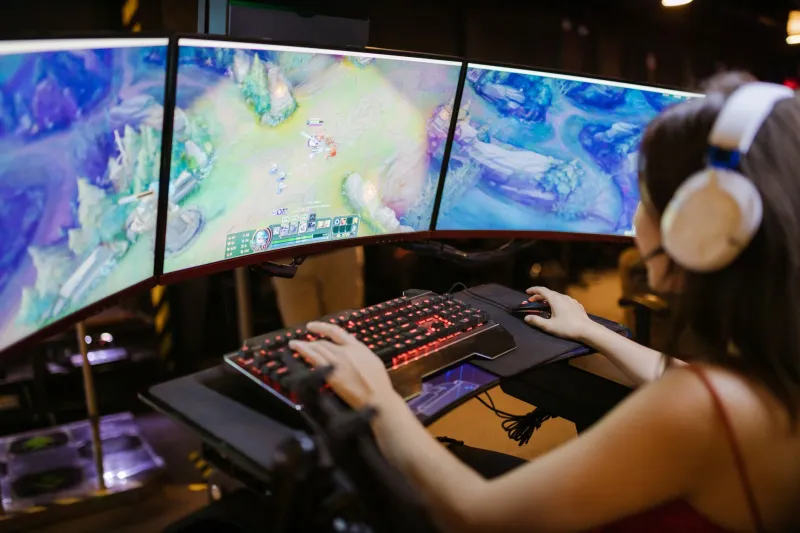
There's a certain ritual a lot of competitive gamers know well. You get stomped in ranked, you close the client, and you flip over to Twitch or YouTube. Maybe you tell yourself you're studying. Maybe you're just venting by watching someone who actually knows what they're doing. Either way, hours pass, and somewhere in the back of your head, you're convinced you're getting better.
Here's the uncomfortable question: are you?
Watching high-level gameplay has real value — nobody's saying otherwise. But there's a version of it that becomes a trap, and a surprising number of competitive players fall into it without ever noticing. The line between learning and spectating is thinner than it looks, and crossing it in the wrong direction can quietly stall your climb for months.
The Confidence Illusion
When you watch a Challenger-level player or a top-ranked streamer break down a situation in real time, something happens in your brain that feels a lot like understanding. You nod along. You think, yeah, that makes sense. You see the rotation, the positioning, the decision — and it clicks.
Except it doesn't really click. Not in the way that matters.
Psychologists call this the fluency illusion — the feeling that because you can follow along with something, you could actually do it yourself. It's the same reason students think they've learned material after re-reading their notes, only to blank on the test. Watching a pro make a play feel obvious doesn't mean you've internalized the dozens of micro-reads, habit patterns, and split-second instincts that made it possible.
What you're actually absorbing is the outcome, not the process. And when you load into your next ranked match carrying that false sense of clarity, you're setting yourself up for a specific kind of frustration — the "I know what I should be doing but I can't actually do it" spiral.
Unrealistic Baselines and the Comparison Spiral
Spend enough time watching elite players, and your internal benchmark for "normal" starts to shift. Suddenly your teammates look worse than they did before. Your own plays feel embarrassingly slow. You start expecting the game to flow the way it does in a pro stream — clean, intentional, readable — and when it doesn't, it feels like something's broken.
Spoiler: nothing's broken. That's just what your actual rank looks like.
This comparison spiral is one of the sneakier ways heavy spectating hurts your game. You're not just watching better players — you're recalibrating your expectations to a standard you haven't earned yet. And when reality doesn't match that internal picture, it messes with your in-game decision-making. You hesitate. You second-guess reads that would've been automatic before. You try to replicate moves you've seen work in coordinated, high-level environments inside chaotic solo queue lobbies where none of the same conditions apply.
That's not improvement. That's noise.
Passive vs. Active: The Difference That Actually Matters
Here's where it gets nuanced, because the answer isn't "stop watching streams." The answer is to change how you watch them.
Passive watching is comfortable. You follow the action, you enjoy the entertainment, you absorb vibes. Active study is work. It means pausing, asking yourself what you would have done before the pro makes their move, and then comparing. It means watching a single clip five times instead of breezing through a three-hour VOD. It means taking notes — actual notes, not mental ones that evaporate in twenty minutes.
The players who genuinely improve from watching content treat it like film study, not background TV. They pick one or two specific things to focus on per session — rotation timing, resource management, communication habits — and they filter everything else out. That's a fundamentally different cognitive experience than just having a stream up while you eat dinner.
If you can't articulate what you learned after closing the tab, you probably didn't learn much.
The Time Budget Problem
There's also a simple math issue that doesn't get talked about enough. Time spent watching is time not spent playing. And while repetition alone isn't everything, there's no substitute for actual reps when it comes to building muscle memory, game sense, and the kind of pattern recognition that only comes from being inside the chaos.
A player who watches four hours of pro content and plays one hour of ranked is structurally worse off than a player who watches one hour and plays four — assuming both are approaching their sessions with some intentionality. The information you absorb from watching has diminishing returns. The information you absorb from playing compounds.
If your weekly gaming time is limited (and for most adults in the US juggling jobs, family, and actual human responsibilities, it is), every hour matters. Letting spectatorship eat into your play time isn't a neutral tradeoff. It's a choice that costs you real progression.
How to Actually Use Content Without Getting Trapped
So what does a healthy relationship with competitive content actually look like? A few things that work:
Set a watch-to-play ratio. Something like one hour of content for every two to three hours of active play keeps your time budget honest. Adjust based on what's actually moving your rank.
Watch your own replays first. Before you load up someone else's gameplay, review your own recent matches. Identify one or two recurring mistakes. Then go find content that specifically addresses those problems. You're looking for targeted answers, not general inspiration.
Use the pause button aggressively. Stop the video before the pro makes a decision and ask yourself what you'd do. Then watch what they do. The gap between your answer and theirs is where the actual learning lives.
Limit entertainment-first streams. There's nothing wrong with watching your favorite streamer for fun — just know that's what you're doing. Don't dress up entertainment as study. Keep the two separate in your head.
Take one thing per session. Not ten things. One. Write it down. Try to apply it in your next three games. See what happens.
The Arena Isn't on Someone Else's Screen
At the end of the day, the rank you want isn't sitting inside a pro's stream waiting for you to absorb it. It's built in your own matches, through your own decisions, under your own pressure. Watching great players is a tool — a useful one when used right, a time sink when it isn't.
The players who climb aren't the ones who watch the most. They're the ones who play the most with purpose, and use content to sharpen specific edges rather than fill a vague feeling that they should be doing something productive.
Close the tab. Queue up. That's where your actual improvement is waiting.